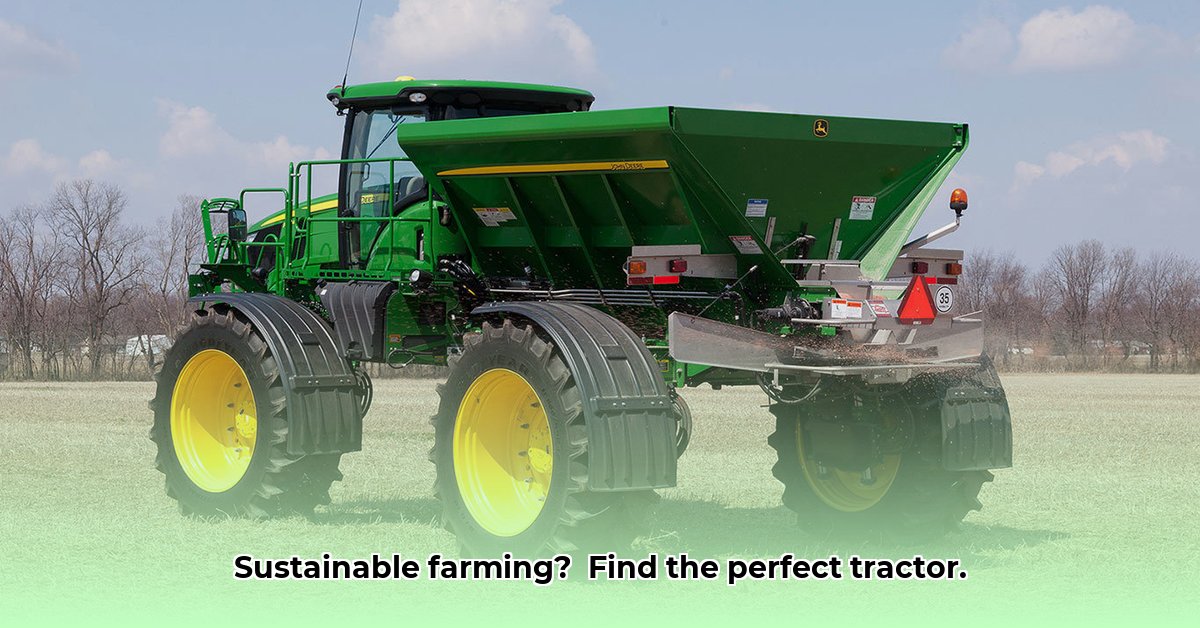
Choosing the right spreader tractor is a crucial investment for any farm, impacting efficiency, crop yield, and environmental sustainability. This guide provides a step-by-step approach to selecting and operating a spreader tractor, regardless of your farming scale or experience level. For more information on spreader tractors, check out this helpful resource: Spreader Tractor Guide.
Understanding Your Farming Operation
Before exploring spreader tractors, assess your specific needs. What crops are you cultivating? (e.g., wheat, corn, soybeans, vegetables) How many acres do you manage? What's your budget? These factors directly influence the type and size of spreader you need. For instance, a small-scale vegetable farm will have different requirements than a large-scale grain operation. A realistic budget will narrow your options considerably, preventing the temptation of "over-speccing." Remember, the most expensive isn't always the best.
Key Features to Consider
Several key features distinguish a high-performing spreader tractor:
Capacity (lbs): The amount of fertilizer or seed the hopper can hold. Larger capacity means fewer refills, saving time and fuel. This is directly proportional to your field size; larger fields generally require higher capacity spreaders. Consider your average spreading rate per acre to determine the ideal capacity.
Spreading Pattern: Uniform distribution is crucial for optimal crop growth. Options include broadcast (covering a wide area) and drop (more precise, targeted application). Adjustable settings allow for adaptation to different field conditions and crop types. GPS-guided systems offer precision and efficiency, minimizing waste.
Ease of Use: Intuitive controls and straightforward calibration are essential for efficient operation. Consider factors like the number of settings, display, and ease of maintenance. A simpler machine is easier to maintain and allows for quicker training of additional farm workers.
Maintenance Requirements: Regular maintenance is crucial. Choose a model with easily accessible components for simpler cleaning and lubrication. This reduces downtime and extends the equipment’s lifespan.
Sustainability Features: Consider fuel efficiency and the materials used in the construction. Some materials are more environmentally friendly than others, and fuel-efficient models will reduce your operational costs and carbon footprint.
Selecting the Right Model: A Structured Approach
To facilitate your comparison, let's use a structured approach:
Step 1: Define Your Needs: Based on the factors above, specify your requirements.
Step 2: Research Models: Explore models from reputable manufacturers, using online resources (like Amazon and Tractor Supply Co. listings) to compare specifications, features, and prices. Read reviews from other farmers for valuable insights into real-world performance.
Step 3: Create a Comparison Table: Organize your findings in a table, as shown below. This example uses hypothetical models; replace these with your actual research.
| Feature | Model A | Model B | Model C |
|---|---|---|---|
| Capacity (lbs) | 800 | 1500 | 2500 |
| Spreading Pattern | Adjustable, Variable Width | Fixed Width, Consistent | GPS-Guided, Variable Rate Application |
| Ease of Use | Simple, Manual Controls | Electronic Controls, User-Friendly | Highly Automated, Touchscreen Controls |
| Maintenance | Easy Access to Key Components | Moderate Maintenance Needs | Requires Specialized Maintenance |
| Sustainability | Standard Materials | Some Recycled Materials | Bio-based Components, Fuel-Efficient |
| Approximate Price | $10,000 - $12,000 | $15,000 - $18,000 | $25,000 - $30,000 |
Step 4: Select the Best Model: Choose the model that best aligns with your needs, budget, and sustainability goals. Consult with local agricultural experts and equipment dealers for personalized advice.
Safe and Effective Operation: Prioritizing Safety
- Always read the operator's manual: Familiarize yourself with all safety features and operating procedures before use.
- Regular Pre-Operation Inspection: Inspect the spreader before each use for any damage or malfunction.
- Accurate Calibration: Ensure proper calibration for even distribution and to minimize waste.
- Protective Gear: Always wear appropriate safety gear, including gloves, eye protection, and sturdy footwear.
- Safe Operating Practices: Maintain awareness of your surroundings and follow safe operating procedures to prevent accidents.
Maintenance and Troubleshooting: Extending Equipment Life
- Regular Cleaning: Clean the spreader after each use to remove debris and prevent buildup.
- Lubrication: Lubricate moving parts as recommended in the operator's manual to ensure smooth operation and prevent wear.
- Preventative Maintenance: Perform regular inspections for wear and tear. Address minor issues promptly to prevent major problems.
- Seek Professional Help: Don’t hesitate to consult a qualified mechanic for repairs or troubleshooting complex issues.
By following these steps, you can select and operate a spreader tractor that optimizes your farming practices, reduces resource waste, and promotes long-term sustainability.